

ESB Mobility Award Winners – 2026
Damiano Bertolo
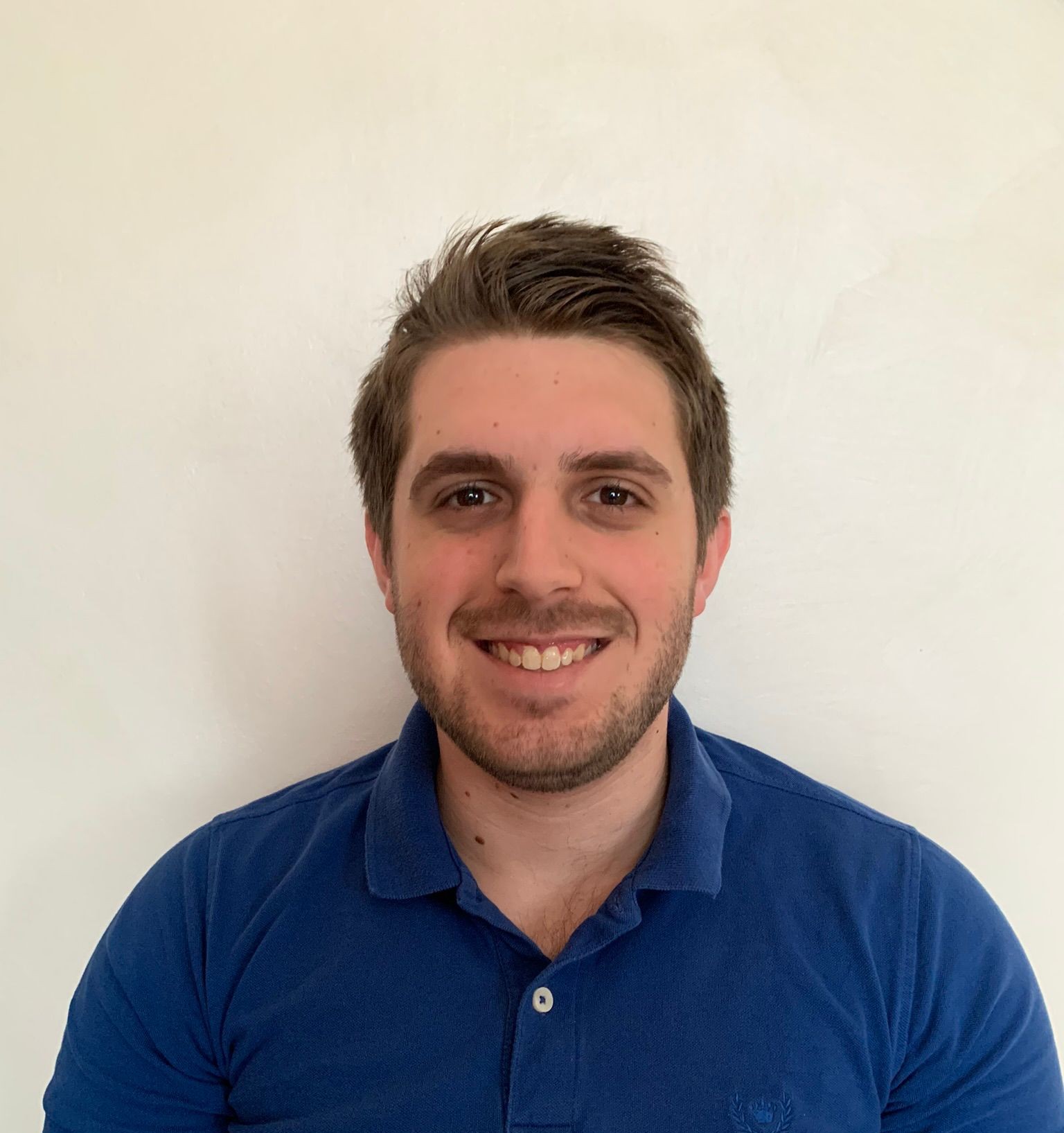
Damiano Bertolo is a PhD student in Bioengineering at Politecnico di Milano in Milan, Italy. He holds an MSc in Biomedical Engineering from Politecnico di Milano and started his PhD in 2024. His research is dedicated to investigating the mechanical behavior of retinal tissue in order to develop material models to simulate clinical procedures. The first part of his research was dedicated to the characterization of the mechanical properties of retinal tissue, with experimental tests performed on pig retinas. Currently, the focus is on the formulation of an innovative microstructural mechanical model of the retina that captures the complex behavior of the tissue. The final part of his research concerns the simulation of the subretinal injection surgery. The goal is to investigate the effect of different surgical parameters on retinal damage and detachment, in order to reduce the risks associated with the procedure.
Planned Research Project
“Biomechanics of Subretinal Gene Therapy Injection: Computational Analysis of In Vivo Experimental Models and Clinical Data”
With the help of the ESB Mobility Award, Damiano will travel to the University of Oxford, where he will spend six months at the Oxford University Hospital under the supervision of Professor Kanmin Xue, leader of the Retinal Disease and Repair Group. Damiano’s work will focus on improving the current experimental setup used in Professor Xue’s lab for testing subretinal injections. Coupling advanced experimental and clinical data with the mechanical models developed at Politecnico di Milano will allow for a deeper investigation into the mechanisms behind retinal damage and detachment during subretinal injections.
Giulia Galteri
Giulia Galteri is a postdoctoral researcher in Biomechanics at the University of Bologna, Italy. She obtained a PhD in Health and Technology Science in 2025, with a research focus on experimental biomechanics. During her PhD, she contributed to the development of a customized osseointegrated stem for individuals with lower-limb amputation and established a comprehensive framework for its preclinical evaluation.
Her work combines experimental mechanical testing, Digital Image Correlation, medical imaging and computational approaches to investigate bone mechanical behaviour and the primary stability of orthopaedic implants.
Through her collaboration with Lund University, Sweden, she has gained experience in bone fracture mechanics and multiscale tissue characterization, which has contributed to her growing interest in understanding the mechanisms underlying skeletal fragility in type 2 diabetes mellitus.
Planned Research Project
“Determinants of Skeletal Fragility in Type 2 Diabetes Mellitus“
Thanks to the ESB Mobility Award, Giulia will travel to Lund University in Sweden to investigate the mechanisms underlying skeletal fragility in type 2 diabetes mellitus. During her research stay, she will combine mechanical testing of human cortical bone with advanced imaging and tissue characterization to investigate how diabetes-related alterations affect bone fracture resistance. Her work will benefit from the expertise of Prof. Hanna Isaksson’s group in multiscale bone biomechanics and characterization. The project will strengthen the ongoing collaboration between the University of Bologna and Lund University and contribute to identifying tissue-level determinants of increased fracture risk in diabetes.
Matilde Marradi
Matilde Marradi is a PhD student at the MERLN Institute for Regenerative Medicine in Maastricht University. She holds an MSc in Biomedical Engineering from Politecnico di Milano and started her PhD in 2023. Her research is dedicated to computational modeling of the fibrotic response to implanted biomaterials, within the Material Driven Regeneration Consortium (https://drive-rm.nl/). Matilde has already gained an understanding of the immune response to a foreign body through novel experimental and computational methods. The final part of her research concerns the body’s response to silicone breast implants, with the aim of better understanding the role that mechanosensing and mechanotransduction play in the (dis)regulation of this process.
Planned Research Project
“SCARy: a computational model coupling mechanical and biochemical stimuli to study implant-induced fibrosis in breast reconstruction”
Thanks to the ESB Mobility Award, Matilde will travel to Columbia University in New York. During a research stay at the Tepole Lab of Biomechanics, Matilde’s work will benefit from the supervision of Professor Adrian Buganza Tepole, an expert in the mechanical modeling of growth and remodeling of soft tissue. Her research aims at
coupling Tepole Lab’s recently developed pipeline for modeling patient-specific skin growth during breast tissue expansion with her equation-based model of immune response and fibrotic tissue formation. SCARy will be an innovative platform coupling biochemical signaling with the mechanical environment to study implant encapsulation, a topic of great scientific, clinical, and industrial relevance.