

Education and Early Career Committee
Members:
Alessio Amicone
Laboratory for Orthopaedic Technology, Institute for Biomechanics, ETH Zürich, Zürich, Switzerland
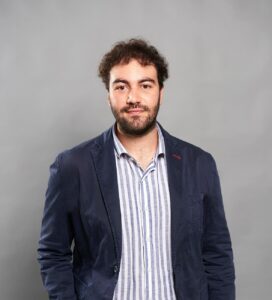
Alessio Amicone is a doctoral researcher at ETH Zurich, where he is pursuing his PhD within the EU-funded Marie Skłodowska-Curie Innovative Training Network BioTrib. His research focuses on understanding damage and failure mechanisms in articular cartilage and engineered fibrous collagenous tissues, combining experimental testing with computational modelling.
Alessio’s interest in biomechanics began during his Bachelor’s studies in Biomedical Engineering at the University of Bologna, where his thesis sparked a strong interest in the mechanical behaviour of spinal tissues. A subsequent Erasmus+ traineeship at the INSIGNEO in Sheffield further strengthened this interest in an international and interdisciplinary research environment. He later obtained his Master’s degree in Biomedical Engineering at the Politecnico di Milano, specialising in biomechanics and biomaterials. Convinced that science grows through people and shared experiences, Alessio joined the European Society of Biomechanics early in his career and became a member of the Education and Early Career Committee in 2023. He has contributed to the social media team and is now actively involved in organising webinars, educational initiatives, and conference-related events. Through his work, he aims to give back to the biomechanics community that supported his path and to help create an open, engaging, and inspiring environment for the next generation of biomechanists.Dr. Jorge Barrasa Fano
Mechanobiology and Tissue Engineering lab, KU Leuven, Leuven, Belgium
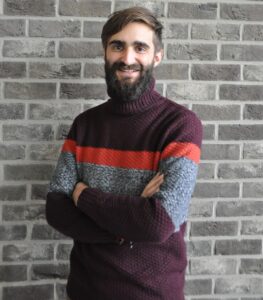
Jorge Barrasa Fano is a biomedical engineer and mechanobiology researcher with a strong interest in understanding how mechanical forces regulate cellular and tissue behavior in health and disease. His research focuses on the development of advanced experimental and computational methods to quantify cell-generated forces in three-dimensional environments, with particular emphasis on vascular biology and tissue engineering.
He completed his PhD at KU Leuven, where he worked in the Mechanobiology and Tissue Engineering laboratory, developing novel 3D Traction Force Microscopy (TFM) approaches and open-source computational tools to improve the accuracy of force inference in complex biomaterials such as fibrillar collagen hydrogels. His work bridges biomechanics, image analysis, and inverse modeling, and has been applied to study angiogenic sprouting, cerebral cavernous malformations, and human organoid systems. Jorge has an interdisciplinary background spanning telecommunication engineering and biomedical engineering, with strong expertise in programming, data analysis, and modeling. Beyond research, he is actively engaged in science communication and outreach through leadership roles that connect biomechanics research with broader audiences.Dr. Rajdeep Ghosh

Department of Mechanical Engineering, University of Sheffield, Sheffield, UK
Rajdeep Ghosh is a Postdoctoral Researcher in the School of Mechanical, Aerospace and Civil Engineering at the University of Sheffield, UK, and a member of Insigneo Institute. He is currently working on the “METASTRA” project, which aims to transform fracture risk assessment in cancer patients with vertebral metastases.
He completed his bachelor’s in mechanical engineering from the National Institute of Technology Agartala, India. He earned his PhD in Bone Biomechanics and Computational Mechanobiology from the Indian Institute of Technology Guwahati. His doctoral work aimed to study the influence of implant surface textures on osseointegration coupled with a neural network–genetic algorithm framework for optimising implant design.
Following his PhD, he worked as a Postdoctoral Researcher in the Department of Mechanical Engineering at the Indian Institute of Technology Delhi, contributing to “add-Bite” IGSTC project on developing lattice-structured TMJ implants using additive manufacturing for patients with ankylosis.
Rajdeep has authored eight peer-reviewed journal articles, three book chapters, and has presented at several international conferences. He serves as a reviewer for journals and research grants in bone biomechanics, medical devices, and digital twins. His research interests lie at the intersection of biomechanics, medical imaging, machine learning and healthcare.
Dr. Anna Corti
Department of Electronics, Information and Bioengineering of Politecnico di Milano, Milan, Italy
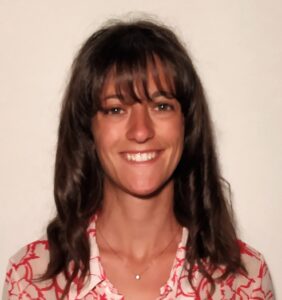
Anna Corti is a Post-Doctoral Researcher at the Dept. of Electronics, Information and Bioengineering of Politecnico di Milano (Italy). She obtained the PhD in Bioengineering at Politecnico di Milano in July 2022 with a thesis entitled “Multiscale modeling of vascular adaptation”. Before her current position, she worked as Post-Doctoral Researcher at Dept. of Chemistry, Materials and Chemical Engineering “G. Natta” of Politecnico di Milano until April 2023. During her doctoral studies, her research focused on the development of multiscale computational frameworks simulating vascular cell dynamics and arterial wall remodeling (e.g., atherosclerosis, restenosis) in response to mechanical and biological cues, through the integration of continuum and discrete modeling approaches. Currently, her research mainly focuses on image analysis, radiomics and artificial intelligence methods in cancer and cardiovascular research. Dr. Corti has authored several scientific papers on international peer-reviewed journals, book chapters, conference proceedings and contributions to national and international conferences. She presented her research national and international conferences with 4 invited talks, and several podium and poster presentations. She is also a Review Editor of Frontiers in Medical Technology, section Cardiovascular MedTech. Her research was awarded with numerous prestigious national and international awards, including the Best Master Thesis Award 2019 (ESB-ITA), Best VPHi Student Award 2020, Medtronic Travel Award 2020 (VPH 2020), CAE International Best Poster Award 2020, ANSYS Hall of Fame Top 10 Finalists for 2020, ESB Student Award 2021, Finalist of the ASME-BED/SB3C Student Paper Competition 2021, ESB Travel award 2022, ESB-ITA Best Poster Award 2022, Best Doctoral Thesis Award in Biomechanics 2023 (ESB), Best Doctoral Thesis in Theoretical and Applied Biomechanics (GBMA-AIMETA) and the VPHi Best Thesis Award in In Silico Medicine (VPHi).
Benedetta Fantaci
Applied Mechanics and Bioengineering (AMB), Instituto Universitario de Investigación en Ingeniería de Aragón, University of Zaragoza, Zaragoza, Spain
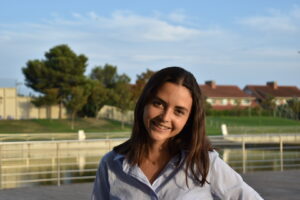
Benedetta Fantaci obtained her bachelor’s and master’s degrees in Biomedical Engineering at Polytechnic of Milan, where she worked on the implementation of an inverse elastostatic algorithm with exact linearization to determine the stress-free configuration of an artery as final master thesis’s project. During her master experience, Benedetta discovered her main interests in Finite-Element Modelling, Non-linear Solid Mechanics and Programming. Since September 2021, she has joined the OBERON project in the Marie Skłodowska-Curie actions framework (H2020 MSCA ITN) as PhD candidate at the University of Zaragoza (Spain). She is currently working on finite-element simulations of laser refractive surgery and their effects on corneal biomechanics. Benedetta is involved in multiple collaborations with different research groups in Europe and she is the tutor of some master’s thesis projects abroad. She is member of the European Society of Biomechanics since 2021 and she is thrilled to be part of the Early Career Committee!
Vijay Nandurdikar
Department of Mechanical and Aerospace Engineering, University of Manchester, Manchester, UK
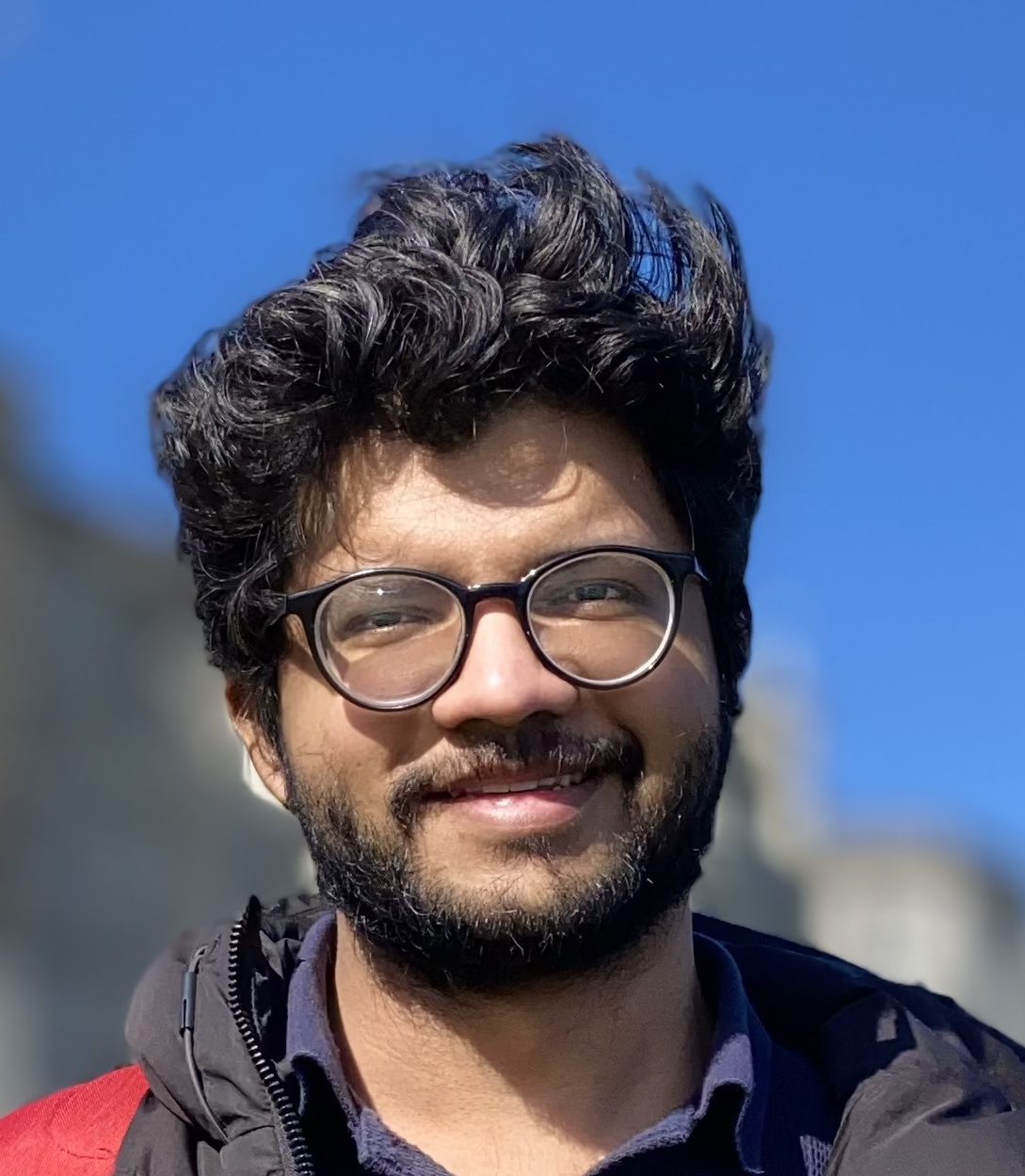
Vijay Nandurdikar is a doctoral researcher in Mechanical Engineering at the University of Manchester. His work sits at the interface of computational biomechanics, fluid dynamics, and machine learning. He focuses on creating large, diverse sets of abdominal aortic aneurysm (AAA) geometries and studying their haemodynamics through advanced CFD simulations. By building virtual cohorts and examining how geometric differences influence flow patterns and biomechanical metrics, he aims to improve the understanding of aneurysm behaviour and strengthen the link between computational modelling and clinical decision making. Vijay also develops tools that combine CFD, uncertainty quantification, and surrogate modelling to make large scale analyses more efficient and reproducible.
Within the Education and Early Career Committee, Vijay helps shape activities that bring students and young researchers together. He works on organising “Meet the Expert” sessions and ESB Journal Clubs, providing accessible opportunities for discussion, mentorship, and scientific exchange. He enjoys contributing to a collaborative community and is particularly motivated by initiatives that make computational biomechanics more welcoming and easier to engage with, especially for those entering the field. He is enthusiastic about fostering dialogue across disciplines and supporting environments where early career researchers can learn, connect, and grow.
Giulia de Campo
Computational Biomechanics Lab – Cardiovascular Division, Politecnico di Milano, Milan, Italy
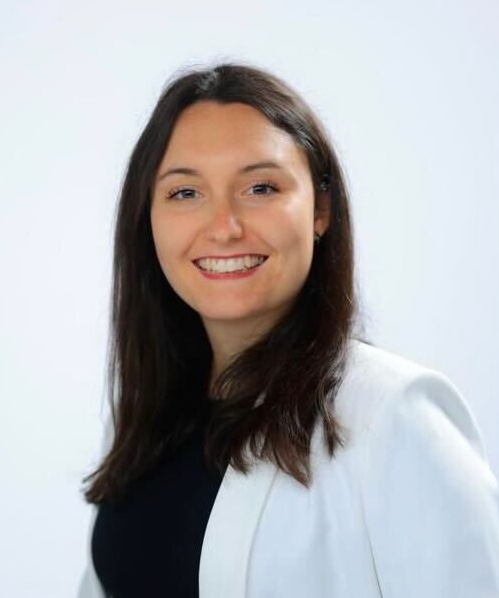
Giulia De Campo is a PhD student in the Computational Biomechanics Lab – Cardiovascular Division at Politecnico di Milano.
She obtained her Bachelor’s degree at Politecnico di Milano, and later took part in a double degree program between Politecnico di Milano and the University of Illinois at Chicago (UIC) for her Master’s degree. During her Master’s thesis, she focused on the development of a microfluidic device to stimulate cells with different biomechanical stimuli, integrating both experimental and computational approaches.
She has always been deeply passionate about the computational world, which led her to continue along this path within the cardiovascular field. Currently, her research focuses on the simulation of TEVAR and EVAR procedures, two minimally invasive techniques used to treat thoracic pathologies such as aneurysms and dissections, as well as abdominal aneurysms.
Within the ESB Student Committee, Giulia is actively involved in social media management and in the organization of the Journal Club.
Through these activities, she contributes to support communication, knowledge exchange, and engagement within the biomechanics community. She values the opportunity to collaborate with motivated young researchers who share a strong interest in biomechanics and is pleased to support the initiatives and activities promoted by ESB.
Siddarth Ananth Swaminathan

Julius Wolff Institute – Center for Musculoskeletal Biomechanics and Regeneration, Charité – Universitätsmedizin Berlin, Berlin, Germany
Siddarth Ananth Swaminathan earned his Bachelor’s degree in Biomedical Engineering from Anna University (India) and completed his Master’s studies in Biomedical Engineering at Centrale Lille (France), where his thesis investigated the neonatal skull deformation under physiological loading during childbirth using finite element modelling. He is currently pursuing his PhD in Computational Mechanobiology at Charité – Universitätsmedizin Berlin, where he is also part of the DFG research unit FOR5177. Siddarth’s doctoral research is dedicated to developing patient-specific finite element models of the lumbar spine to study how fusion surgery reshapes the mechanical and biological environment of the vertebrae. By coupling these models with mechanobiological algorithms, he investigates the pathways through which surgical interventions influence bone formation, remodelling, and long-term vertebral adaptation. Through this integrative in silico framework, his work seeks to provide a deeper, mechanistic understanding of postoperative spine biomechanics and to contribute tools that may ultimately support more precise and personalized clinical decision-making.
As part of the ESB Early Career Committee, Siddarth helps coordinate activities such as Meet the Expert discussions, Student Night, and other student-oriented sessions during ESB gatherings. He is particularly committed to improving communication channels for early career scientists and creating an open, collaborative atmosphere where emerging researchers can find guidance, share ideas, and build meaningful connections within the biomechanics community.
Florian Rieger
Institute for Biomechanics, ETH Zürich, Zurich, Switzerland
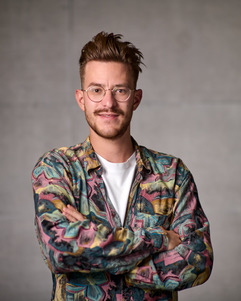
Florian obtained his Master’s degree in Mechanical Engineering at ETH Zürich, focusing on biomedical engineering and clinically motivated research. In his Master’s thesis, he investigated population-level variability in healthy spinal alignment and associated biomechanical loads by combining Statistical Shape Modeling with musculoskeletal modeling to better characterize variations in the healthy spine. Since October 2023, Florian has been a PhD candidate at ETH Zürich and is involved in the European project METASTRA, which aims to develop robust, patient-specific in-silico models to support clinical decision-making in patients affected by spinal metastases. His PhD research involves the development of multiscale in-silico models to explore the interaction between spinal alignment, biomechanics, and intervertebral disc degeneration, eventually contributing to clinically relevant, patient-specific surgical planning.
Within the ESB Student Committee, Florian is actively involved in organizing on-site events at ESB conferences, including Meet the Expert sessions, the Student Poster Award, and Student Night, as well as contributing to the organization of ESB webinars. He values an open, inclusive biomechanics community and is particularly motivated to foster interaction, equality, and integration, while creating opportunities for students and early-stage researchers to connect, exchange ideas, and help shape the future of biomechanical research.
Orçun Taylan

Institute For Orthopaedic Research and Training (IORT) UZ Leuven / KU Leuven, Leuven, Belgium
Orçun Taylan is currently a third-year PhD candidate and also contributes as a research engineer and lab manager of the IORT Joint Simulator Lab.
Orçun Taylan received his Bachelor’s degree in Mechanical Engineering from Suleyman Demirel University, Turkey, followed by a Master’s degree in Biomechanics from Dokuz Eylul University, Turkey. During his studies, he also completed an Erasmus+ student exchange programme at the Cardiovascular Research Institute, Maastricht University, The Netherlands. Alongside his doctoral training, he works as a responsible research engineer in experimental orthopaedic biomechanics within Prof. Scheys’ research group.
Within his PhD, Orçun focuses on integrating daily functional activities into a cadaveric physiological knee simulator, combining engineering and orthopaedics to address clinically relevant research questions. His work aims to improve the understanding of knee joint mechanics under physiologically relevant load-bearing conditions.
Throughout his academic training, Orçun has gained experience in interdisciplinary and multi-institutional research environments, collaborating with engineers, clinicians, and researchers at different career stages. These experiences have strengthened his ability to communicate across disciplines and translate complex biomechanical findings into clinically meaningful insights.
In addition to his research activities, Orçun has been involved in academic outreach and event-related initiatives. He volunteered as a social media coordinator for the International Conference on Mechanics in Medicine and Biology 2024 (Brussels, Belgium), contributing to scientific communication, event promotion, and community engagement within the biomechanics community.
Orçun has been a member of the ESB Early Career and Student community since 2025 and is strongly committed to actively contributing to the Society through engagement, outreach, and collaborative initiatives.
CHAIR: Philipp Thurner

Institute of Lightweight Design and Structural Biomechanics, TU Wien, Vienna, Austria
Further information on Philipp Thurner can be found here.